
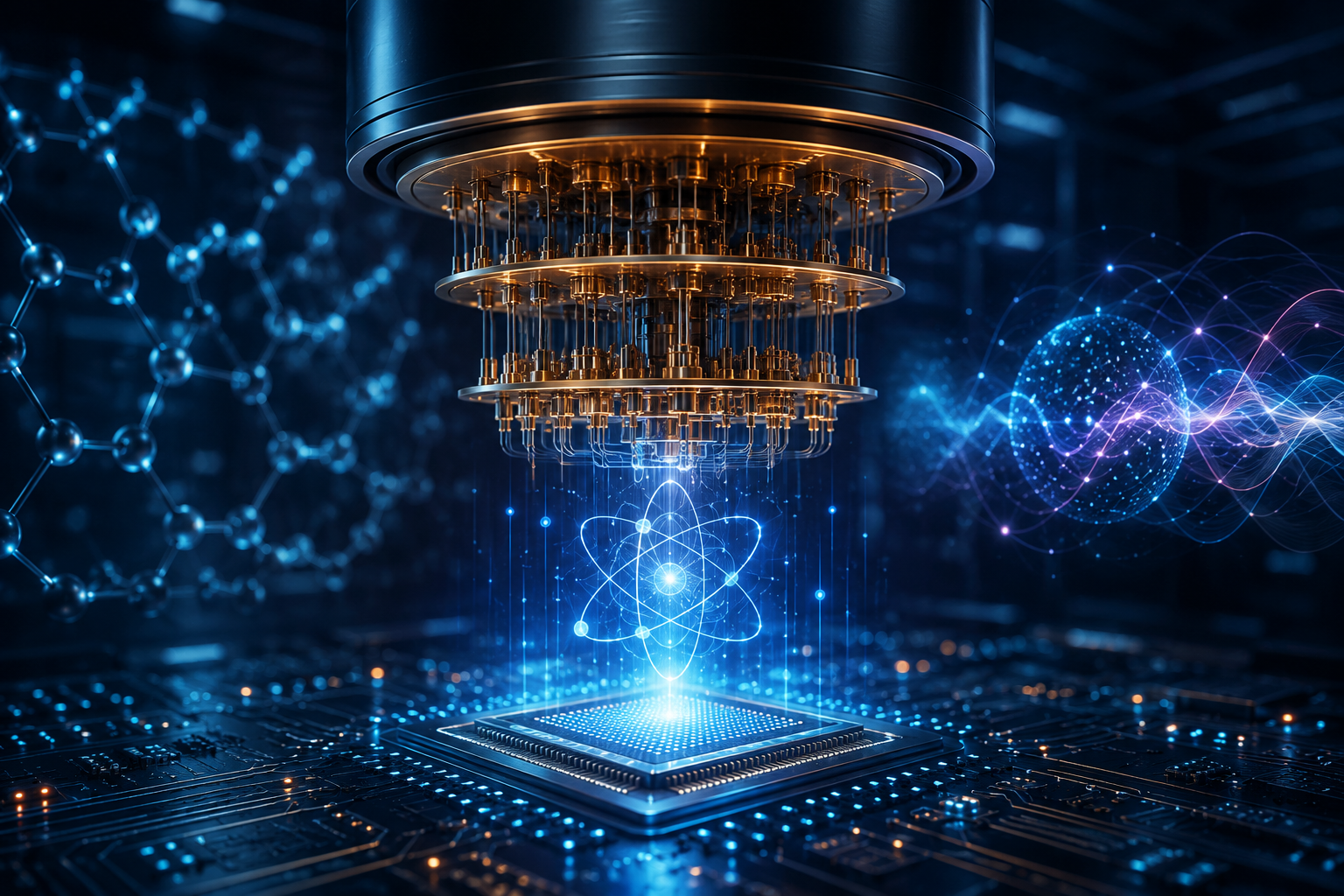
Quantum computing is one of the most exciting technologies of the modern era. While traditional computers have transformed the way we live and work, quantum computers promise to solve problems that are too complex for even today’s most powerful supercomputers. Although the technology is still developing, engineers and scientists believe it has the potential to revolutionize industries such as healthcare, cybersecurity, manufacturing, and artificial intelligence.
What Is Quantum Computing?
Traditional computers process information using bits, which can have a value of either 0 or 1. Quantum computers use quantum bits, or qubits, which can represent multiple states at the same time through a principle known as superposition.
This unique ability allows quantum computers to perform many calculations simultaneously, making them suitable for solving highly complex problems much faster than conventional computers.
Why Is Quantum Computing Important?
Many engineering challenges involve analyzing massive amounts of data and performing millions of calculations. Traditional computers can take hours, days, or even years to solve some of these problems.
Quantum computing offers the possibility of processing this information far more efficiently, helping engineers develop faster and more accurate solutions.
Applications in Engineering
Quantum computing has the potential to transform several engineering fields.
1. Smarter Material Design
Engineers can use quantum computers to study the behavior of atoms and molecules. This could lead to the development of stronger construction materials, lighter aircraft components, and more efficient batteries.
2. Faster Product Development
Designing complex machines often requires thousands of simulations. Quantum computing can significantly reduce simulation time, helping companies develop new products more quickly.
3. Advanced Manufacturing
Manufacturers can optimize production schedules, improve supply chains, and reduce waste using quantum-powered optimization algorithms.
4. Artificial Intelligence
Quantum computing may enhance AI by processing large datasets more efficiently, allowing machine learning models to learn faster and solve more complex problems.
5. Climate and Energy Research
Engineers can use quantum technology to improve renewable energy systems, design better solar cells, and create more efficient power grids.
Benefits of Quantum Computing
Quantum computing offers several advantages for engineering and technology.
- Solves complex calculations faster
- Improves engineering simulations
- Accelerates scientific research
- Optimizes manufacturing processes
- Supports advances in Artificial Intelligence
- Helps develop next-generation materials and medicines
These benefits could help industries innovate more quickly and tackle challenges that are currently difficult to solve.
Challenges Facing Quantum Computing
Despite its potential, quantum computing is still in its early stages.
Building stable quantum computers is extremely challenging because qubits are highly sensitive to changes in temperature, vibration, and electrical interference. Engineers are also working to improve error correction and make quantum systems more reliable.
In addition, quantum hardware is expensive and requires specialized environments to operate.
The Future of Quantum Engineering
Many leading technology companies and research organizations are investing heavily in quantum computing. As hardware improves and software becomes more advanced, engineers are expected to use quantum computers alongside traditional computers rather than replacing them completely.
Future applications may include smarter transportation systems, faster medical discoveries, stronger cybersecurity, advanced robotics, and more efficient manufacturing technologies.
Conclusion
Quantum computing represents a major step forward in engineering and technology. Although the technology is still evolving, its ability to solve complex problems at incredible speed has the potential to reshape industries around the world. As research continues, quantum computing may become one of the most important tools for engineers, scientists, and innovators, helping create smarter solutions for the challenges of tomorrow.