
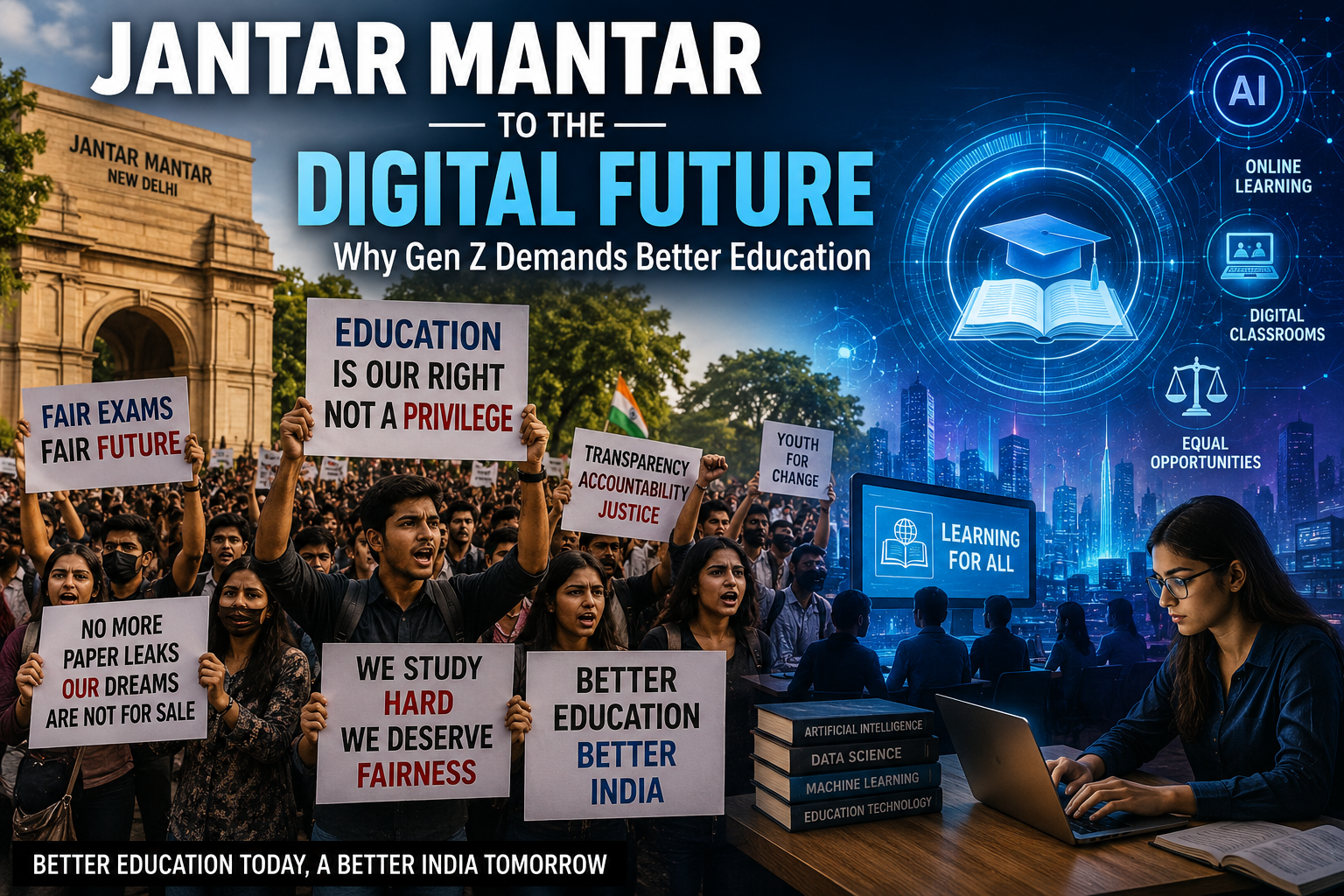
Education has always been the backbone of human progress. Centuries ago, India gave the world Jantar Mantar, a masterpiece of astronomy and mathematics built without computers or modern tools. Today, we live in a world of artificial intelligence, smartphones, and instant information. Yet one question remains just as important now as it was then: is our education system truly preparing students for the future?
This blog explores the journey from the scientific brilliance of Jantar Mantar to the digital classrooms of today, and why Generation Z is pushing hard for a smarter, more relevant education system.
What Is Jantar Mantar and Why Does It Matter?
Jantar Mantar, built by Maharaja Sawai Jai Singh II in the 18th century, is a collection of massive astronomical instruments located in Jaipur, Rajasthan. It was designed to track celestial bodies, measure time, and predict eclipses with remarkable accuracy, all without electricity or modern machines.
What makes Jantar Mantar special is not just its size, but the depth of scientific thinking behind it. It shows that quality education, curiosity, and hands-on learning have always produced extraordinary results. This is the same spirit that today’s learners want to see reflected in modern classrooms.
The Gap Between Old Learning Methods and Modern Needs
Fast forward to today, and the classroom looks very different. Yet many education systems still rely on:
- Rote memorization instead of real understanding
- Outdated syllabi that ignore new-age skills
- One-size-fits-all teaching that does not consider individual learning styles
- Limited exposure to technology, coding, and digital tools
This gap is exactly what Generation Z is questioning. They have grown up with the internet, smartphones, and instant access to knowledge, so they naturally expect their education to be just as fast, flexible, and relevant.
Who Is Gen Z and What Do They Want From Education?
Gen Z, generally born between the late 1990s and early 2010s, is the first generation to grow up fully immersed in digital technology. For them, learning is not limited to textbooks and classrooms. They want education that is:
1. Practical and Skill-Based
Gen Z wants to learn things they can actually use, like coding, digital marketing, financial literacy, and problem-solving, not just theory for the sake of exams.
2. Technology-Driven
Smartboards, online courses, AI-based learning apps, and virtual classrooms are no longer optional extras. Gen Z sees these as basic necessities, not luxuries.
3. Flexible and Personalized
Every student learns differently. Gen Z pushes for personalized learning paths where pace and method match the individual, instead of forcing everyone into the same mold.
4. Focused on Mental Health and Well-Being
Unlike previous generations, Gen Z openly talks about stress, anxiety, and burnout related to academic pressure. They demand an education system that values well-being alongside grades.
5. Connected to Real-World Relevance
Gen Z wants to know why they are learning something and how it connects to real careers and real life, not just abstract concepts stored for an exam.
Why This Shift Matters for India’s Future
India has a young population, and this generation will soon lead the workforce, drive innovation, and shape policy. If the education system does not evolve, the country risks producing graduates who are degree-holders but not job-ready.
On the other hand, if India blends its rich history of scientific excellence, symbolized by monuments like Jantar Mantar, with modern digital tools, it can build an education model that is both rooted in tradition and future-ready.
Bridging the Past and the Future: What Needs to Change
To truly meet Gen Z’s expectations, a few key changes are necessary:
- Update curriculums regularly to match industry and technology trends
- Integrate digital literacy from an early age, not just at the college level
- Encourage critical thinking and creativity, similar to the innovative mindset that built Jantar Mantar
- Train teachers in modern tools and student-centered teaching methods
- Promote skill-based certifications alongside traditional degrees
Conclusion: Learning From the Past to Build a Smarter Future
The story of Jantar Mantar proves that great education has never been about fancy tools alone, it is about curiosity, precision, and purpose. As we move into a digital-first world, Generation Z is simply asking for what every generation deserves: an education system that is relevant, flexible, and future-focused.
By combining the timeless wisdom behind India’s scientific heritage with the digital innovation of today, we can build an education system that truly prepares young minds for tomorrow.